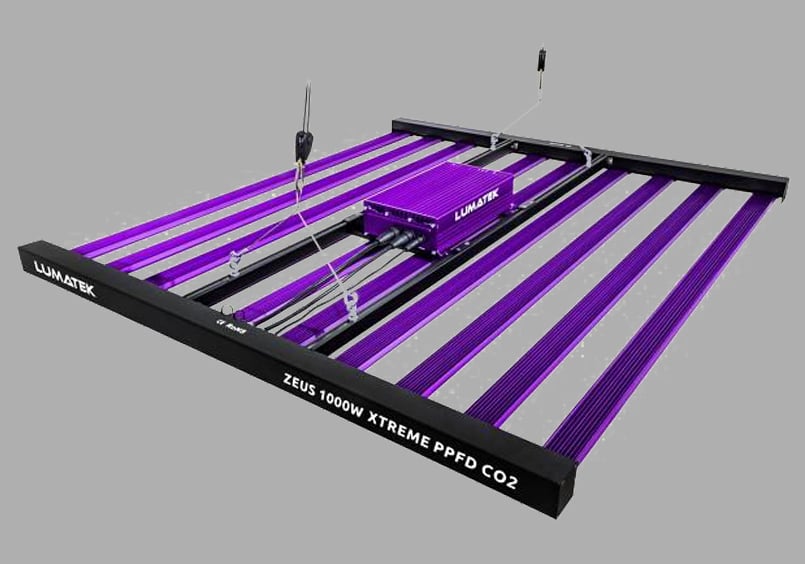
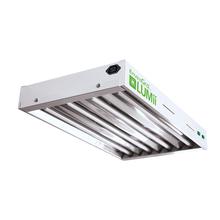
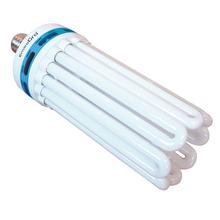
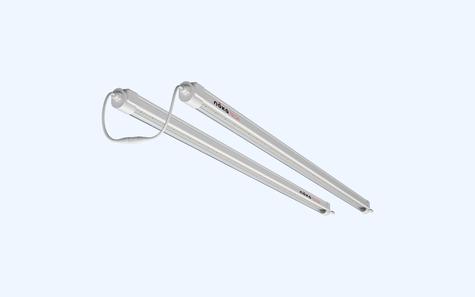
Low energy grow lighting refers to lower-wattage, lower-intensity lighting systems designed for seedlings, clones, propagation, and small plant spaces. These lights use less electricity and produce less heat than high-output LED or HPS grow lights, making them ideal for early growth stages and environments where heat control and energy efficiency are important.
Common low energy grow lighting options include T5 fluorescent lights, TLED fixtures, cool white lamps, and LED clone bars, all of which provide gentle, evenly distributed light rather than the high intensity required for flowering.
For a full beginner overview (lights + systems + tents), read Indoor Growing & Hydroponics Explained.
Low energy grow lights are designed to provide sufficient light for early-stage plant growth or low-intensity growing environments without the high heat output or power requirements of larger grow lights. They typically use technologies such as T5 fluorescents or low-wattage LEDs, which distribute light gently across a smaller canopy.
These lights are commonly used where plant sensitivity, space limitations, or heat management are a priority.
Low energy lighting is most effective when plants do not yet require high light intensity, such as:
Seedling and clone propagation
Small mother plant areas
Supplemental lighting in larger grow setups
Shelving units or cabinets where heat management is critical
Using low energy lighting in these situations helps maintain healthy early growth without overwhelming young plants or increasing cooling costs.
Ideal for propagation and early vegetative stages, T5 tubes spread gentle, even light over a wide area while producing minimal heat.
Slim-profile LED strip lights that offer controlled light distribution and low power consumption, commonly used for shelves, small tents, and propagation spaces.
Fluorescent cool white lamps provide a broad spectrum suitable for general early growth and as supplemental lighting in mixed setups.
Dedicated low-intensity LED bars designed to support clones and seedling trays with targeted, consistent light.
Lower power consumption and reduced running costs
Minimal heat output, making environmental control easier
Gentle light suitable for delicate early growth stages
Limited canopy penetration compared to high-output LED systems
Not suitable as a primary light source for flowering without supplemental lighting