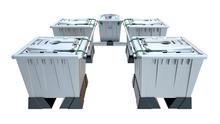


ALIEN RAIN (4 to 48 Pot) 15L PRO Silver Series
From
£875.00
Quick Answer
Hybrid grow systems combine features from two or more hydroponic methods, such as top-feed irrigation, recirculating reservoirs and highly oxygenated root zones. This gives growers consistent nutrient delivery, flexible operation and scalable performance across a wide range of indoor growing setups.
Hybrid grow systems combine the strongest features of several hydroponic techniques within one integrated setup. Instead of relying on a single irrigation method, they may use top-feed watering, recirculating nutrient solution and oxygen-rich root chambers to create stable growing conditions throughout the crop cycle.
This flexible design makes hybrid hydroponic systems suitable for growers who want reliable automated feeding without being limited to one growing method. They can support plants through propagation, vegetative growth and flowering while maintaining consistent moisture and oxygen around the roots.
Our range includes Alien Rain systems in multiple pot sizes and configurations, allowing growers to choose a setup that matches their available space, plant count and preferred growing style.
New to hydroponics? Visit our Indoor Growing & Hydroponics Explained guides to compare the main hydroponic system types and learn how indoor growing setups work.
Combines top-feed irrigation, recirculation and oxygenated root zones in one system.
Each plant receives a consistent supply of water and nutrients from a central reservoir.
High oxygen availability helps support vigorous root growth and nutrient uptake.
Available in multiple pot sizes and configurations for small or larger grow rooms.
A hybrid grow system blends two or more hydroponic techniques into a single recirculating setup. The exact design varies between systems, but many combine top-feed irrigation with a lower root chamber that remains highly oxygenated.
Nutrient solution is pumped from a central reservoir to each plant site. The solution passes through the growing media and root zone before returning to the reservoir for reuse. This gives plants regular access to water and nutrients while reducing waste.
The combination of active irrigation and root-zone aeration can provide greater flexibility than a single-method system. Growers can adjust irrigation frequency, nutrient strength and oxygenation as plant demand changes.
Most hybrid systems use a central reservoir, water pump, irrigation lines, plant modules and return pipework. Nutrient solution is pumped to the top of each pot and distributed through the growing media.
As the solution moves through the root zone, the plant absorbs water and nutrients. Excess solution then drains back into the recirculating system instead of being discarded.
Depending on the design, the lower root chamber may also contain highly oxygenated nutrient solution or remain moist between irrigation cycles. This helps protect roots from drying out while maintaining good oxygen availability.
| System | Irrigation style | Root oxygenation | Best suited to |
|---|---|---|---|
| Hybrid | Top-feed plus recirculation | Excellent | Flexible multi-pot cultivation |
| DWC or RDWC | Roots remain in aerated solution | Excellent | Large, fast-growing plants |
| Drip irrigation | Timed top-feed watering | Depends on media | Coco, soil and mixed substrates |
| Flood & Drain | Periodic flooding and draining | Very good | General-purpose hydroponics |
The main choices are pot capacity, total plant count and Black or Pro Silver specification. The 15-litre systems are suitable where growers want more plant sites within a compact area, while the 30-litre versions provide greater root volume for larger plants.
Systems are available in configurations ranging from 4 to 48 pots. Choose a layout that fits comfortably inside the grow room while leaving enough space for plant development, lighting, airflow and routine maintenance.
The 15-litre Alien Rain systems suit growers who want a compact layout with efficient use of floor space. They are useful for medium-sized plants and higher-density multi-pot gardens.
The 30-litre versions provide more root volume and are better suited to larger plants, longer growing cycles or growers who prefer fewer plants with greater individual size.
Black Series systems provide the core Alien Rain hybrid growing method and are suitable for a wide range of indoor hydroponic gardens.
Pro Silver systems are designed for growers seeking a premium configuration and a more reflective finish around the plant modules.
Clay pebbles are a popular choice for hybrid systems because they provide rapid drainage, strong airflow and reliable support around the root zone.
Other suitable hydroponic substrates may be used where they allow sufficient drainage and do not restrict the recirculating pipework. The irrigation schedule must always be adjusted to match the water-holding capacity of the chosen media.
Media that retain more moisture generally require less frequent irrigation than free-draining clay pebbles.
Because all plant modules share a central nutrient supply, reservoir management is essential. Check pH and EC regularly and adjust the solution according to plant stage, water quality and nutrient manufacturer guidance.
Keep the reservoir covered to prevent light entering the solution. This helps limit algae growth and protects the root zone from unnecessary temperature changes.
Water temperature should remain stable, and pumps or air systems should be inspected frequently to confirm that circulation and oxygenation remain reliable.
Routine inspection is especially important in larger systems because a pump failure or blocked return line may affect several plants at once.
A hybrid grow system combines features from two or more hydroponic methods, such as top-feed irrigation, recirculation and an oxygenated root chamber.
In RDWC, roots are primarily suspended in continuously aerated nutrient solution. A hybrid system may combine this lower root-zone access with top-feed irrigation through a growing medium.
Yes, although growers should understand basic reservoir management, including pH, EC, water temperature, circulation and oxygenation.
Clay pebbles are commonly used because they drain quickly and maintain high air availability around the roots. Other free-draining hydroponic media may also be suitable.
Yes. Alien Rain systems are available from 4 to 48 pots, allowing growers to select or expand to a layout that suits their growing space.
Yes. Excess nutrient solution returns to a central reservoir, where it can be circulated back to the plants.
Fifteen-litre pots provide a more compact layout, while 30-litre pots offer additional root volume for larger plants and longer growing cycles.
Yes. Hybrid hydroponic systems are fully compatible with modern LED grow lights and are well suited to controlled indoor growing environments.
Doctor Blooms can help you compare Alien Rain pot sizes, system configurations and growing media for your available space and intended plant numbers.
Call 01279 501857 or visit our Bishop's Stortford showroom for expert advice.