Quick Answer: HPS grow lights provide powerful orange-red light that is particularly effective during flowering and fruiting. They remain a proven choice for growers who want strong canopy penetration, dependable performance and a lower initial purchase cost than many premium LED systems.
Shop HPS grow lights from Doctor Blooms for indoor flowering rooms, grow tents and established HID lighting systems. Our range includes complete HPS fixtures suitable for growers who want reliable flowering performance without the higher upfront cost of many modern LED alternatives.
High Pressure Sodium lighting has been used successfully in indoor horticulture for decades. Its intense output and spectrum rich in yellow, orange and red wavelengths make it especially effective during flowering and fruit development.
Comparing HPS and LED lighting? Read our Indoor Growing & Hydroponics Explained guide to understand how lighting, heat management, ventilation and environmental control work together.
The orange-red spectrum supports productive flowering, fruiting and bloom development.
High-intensity output reaches into established plant canopies and larger flowering areas.
HPS fixtures are often less expensive to purchase than comparable premium LED systems.
A dependable and widely understood lighting option for hobby and professional growers.
HPS, or High Pressure Sodium, grow lights are High Intensity Discharge lamps that use sodium gas and other elements to produce powerful yellow, orange and red light. This spectrum is particularly useful during flowering, when established plants generally require stronger light intensity.
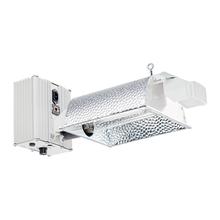
A complete HPS system normally includes a lamp, ballast and reflector. Some systems combine these parts into a complete fixture, while others allow the components to be selected or replaced separately.
| Wattage | Suitable For | Important Considerations |
|---|---|---|
| 250W-315W | Compact flowering and smaller grow spaces | Lower heat output and easier environmental control |
| 400W | Small to medium indoor grow areas | Requires suitable extraction and headroom |
| 600W | Medium flowering areas and grow tents | Coverage depends on reflector design and mounting height |
| 1000W | Large grow rooms and high-intensity flowering | Requires strong cooling, extraction and adequate ceiling height |
HPS grow lights remain a practical choice for growers who want proven flowering performance, strong canopy penetration and a lower initial equipment cost. They are particularly suitable for growers replacing an existing HID fixture or using a cool, well-ventilated grow room.
The most important considerations are choosing a suitable wattage, allowing enough space above the canopy and providing adequate ventilation to remove the heat produced by the lamp.
| Feature | HPS | LED |
|---|---|---|
| Initial Cost | Usually lower | Usually higher |
| Running Cost | Higher | Generally lower |
| Heat Output | High | Lower |
| Flowering Performance | Strong and proven | Strong with a quality fixture |
| Lamp Replacement | Required periodically | No regular bulb replacement |
| Full-Cycle Use | Best known for flowering | Commonly used from seedling to harvest |
HPS may be the better choice when the purchase budget is limited, compatible equipment is already installed or additional warmth is useful. LED may be more suitable where electricity consumption, excess heat and limited ventilation are the main concerns.
HPS lamps produce considerably more radiant heat than modern LED fixtures. This can be useful during colder periods, but suitable extraction and air movement are essential in most enclosed indoor growing environments.
A typical HPS grow room may require:
Important: Do not increase lamp wattage without first checking your extraction capacity, electrical load, ceiling height and maximum grow-room temperature.
Yes. HPS lighting remains a proven and dependable option, especially for growers who already own compatible ballasts and reflectors or who want strong flowering output at a lower purchase price.
HPS may be suitable when:
LED may be more suitable when:
Choose from dependable HPS fixtures designed for indoor flowering and established HID systems.
We can help you compare wattage, heat output, canopy coverage and ventilation requirements.
Order online for UK delivery or contact us before purchasing for help selecting a suitable system.
Visit our Bishop's Stortford showroom to discuss your grow space and lighting requirements.
HPS grow lights are High Intensity Discharge lamps that produce powerful yellow, orange and red light, making them particularly effective during flowering and fruiting.
Yes. They remain a proven option for growers who want dependable flowering output, lower initial costs or compatibility with existing HID equipment.
Choose the wattage according to your plant canopy, reflector, available headroom and the amount of heat your ventilation or cooling system can remove.
Yes. An HPS lamp requires a compatible ballast to start the lamp and regulate its electrical current safely.
Yes, although HPS is best known for flowering. Many growers prefer a bluer-spectrum lamp or full-spectrum LED during propagation and vegetative growth.
HPS lamps gradually lose output as they age. Replacement intervals vary by lamp and operating schedule, so follow the manufacturer's guidance and monitor light performance.
Yes. HPS systems generally produce more radiant heat, so adequate extraction, circulation and temperature monitoring are important.
Yes, provided the tent has enough vertical space and an extraction system capable of controlling the heat produced by the lamp.
Yes. Contact us with your grow-space dimensions, canopy size, ventilation equipment and preferred wattage for practical help choosing a suitable HPS fixture.
Doctor Blooms can help you compare HPS wattage, fixture design, heat output and environmental requirements for your grow room.
Call 01279 501857 or visit our Bishop's Stortford showroom for practical advice.