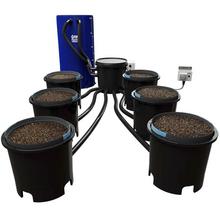


IWS Flood & Drain Systems Standard Remote
From
£530.00
Quick Answer
Flood and drain systems, also known as ebb and flow systems, automatically flood plant roots with nutrient solution before draining it back to the reservoir. This repeating cycle supplies water, nutrients and oxygen directly to the root zone, supporting rapid growth and healthy root development.
Flood and drain hydroponics is one of the most reliable and versatile automated growing methods available. A timer-controlled pump moves nutrient solution from a reservoir into the growing tray or plant modules before allowing it to drain back for reuse.
As the nutrient solution drains away, fresh oxygen is drawn into the growing media and root zone. This repeating wet-and-dry cycle helps plants receive consistent nutrition without leaving the roots permanently submerged.
Flood and drain systems can be used for herbs, vegetables, fruiting plants and ornamental crops in grow tents, indoor gardens and commercial cultivation spaces. They are also compatible with several growing media, including clay pebbles, rockwool and selected coco-based mixes.
New to hydroponics? Visit our Indoor Growing & Hydroponics Explained guides to compare the main hydroponic system types and understand how automated irrigation works.
Regular irrigation cycles deliver water and nutrients directly to the roots for vigorous plant development.
Draining the system draws fresh oxygen into the root zone and helps reduce waterlogging.
Recirculating nutrient solution helps reduce water and fertiliser waste throughout the crop cycle.
Use flood and drain systems for herbs, vegetables, fruiting plants and ornamental crops.
Flood and drain systems use a reservoir, water pump, timer and growing tray or connected plant modules. At scheduled intervals, the pump moves nutrient solution into the root zone until the required flood level is reached.
When the pump stops, the nutrient solution drains back into the reservoir through gravity or dedicated return pipework. As the water level drops, air is pulled into the spaces within the growing media, replacing stale gases around the roots with fresh oxygen.
The same nutrient solution is then reused during the next irrigation cycle. This recirculating design makes flood and drain systems efficient while giving the grower control over feeding frequency and root-zone moisture.
| System | How roots are fed | Root oxygenation | Best suited to |
|---|---|---|---|
| Flood & Drain | Root zone is flooded and drained at timed intervals | Excellent | Versatile indoor and greenhouse cultivation |
| DWC or RDWC | Roots remain suspended in aerated nutrient solution | Excellent | Large, fast-growing plants |
| Drip Irrigation | Nutrient solution is delivered from above through drippers | Depends on growing media | Coco, soil and mixed substrates |
| NFT | A shallow film of solution flows continuously past roots | Excellent | Leafy greens, herbs and compact crops |
The right system depends on plant numbers, crop size, available floor space and how much control you want over each plant site. Compact tray systems are practical for propagation and smaller grow tents, while multi-pot systems suit larger plants and higher-capacity rooms.
Consider the total reservoir volume as well as the amount of nutrient solution needed to flood the complete system. The reservoir must hold enough solution to fill the trays or modules without allowing the pump to run dry.
Smaller flood and drain systems are suitable for beginners, propagation areas and compact growing spaces. They are easier to fill, clean and monitor and can be a good introduction to recirculating hydroponics.
Larger systems support more plants and greater root volume. They are suited to established indoor gardens where automated irrigation can reduce the time required to water individual containers.
Systems such as IWS flood and drain setups use individual pots connected to a central control unit and reservoir. This allows larger plants to be spaced independently while receiving the same timed irrigation cycle.
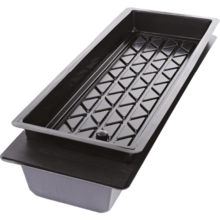
Tray systems flood one larger growing area and are useful for propagation, smaller containers or groups of plants arranged at a similar height.
Clay pebbles are one of the most popular choices for flood and drain hydroponics. They drain quickly, retain useful moisture on their surface and leave plenty of air space around the roots.
Rockwool cubes and slabs hold more water than clay pebbles, so irrigation frequency should be adjusted carefully. They work well when the flood level and timing are matched to the size of the block.
Grow cubes provide a balance between moisture retention and aeration. Their loose structure allows roots to spread through the container while the flood cycle distributes nutrient solution evenly.
Coco may be used in selected flood and drain systems, but it retains more water than clay pebbles. Flood cycles should be less frequent to avoid keeping the root zone too wet.
There is no single irrigation schedule that suits every flood and drain setup. Frequency depends on the growing media, plant size, temperature, humidity, pot volume and the amount of water retained after each cycle.
Free-draining clay pebbles may require more frequent flooding than rockwool or coco. Young plants generally use less water, while mature plants in a warm environment may need additional cycles during the light period.
The root zone should remain moist without staying permanently saturated. Monitor plant condition and media moisture, then adjust the timer gradually rather than making large changes.
Because flood and drain systems reuse nutrient solution, regular reservoir checks are important. Monitor pH, EC and water temperature and adjust the solution according to the crop stage and nutrient manufacturer's guidance.
Keep the reservoir covered to block light and reduce algae growth. Ensure the return pipework drains freely and that the pump remains fully submerged during every irrigation cycle.
Top up the reservoir as plants use water, but remember that nutrient concentration may change as the water level falls. Larger solution changes should be completed periodically to prevent unwanted mineral imbalance.
Routine maintenance helps prevent uneven irrigation and protects the entire crop from pump or drainage problems. Run the system without plants after cleaning to confirm that it fills and drains correctly.
A flood and drain system periodically fills the root zone with nutrient solution before draining it back to a central reservoir for reuse. It is also known as an ebb and flow system.
Yes. Flood and drain systems can be straightforward to operate once the pump, timer and flood levels have been set correctly.
Clay pebbles are the most common choice because they provide fast drainage and strong root aeration. Rockwool, grow cubes and selected coco mixes can also be used.
The correct frequency depends on plant size, environmental conditions and the water-holding capacity of the growing media. Free-draining media normally require more frequent cycles.
No. The pump usually operates only during scheduled flood cycles. Once the required level is reached, the nutrient solution drains back into the reservoir.
Many systems can be expanded with additional pots, trays, pipework or a larger reservoir, provided the pump and control system can support the added capacity.
Yes. The nutrient solution is collected and returned to the reservoir after each cycle, reducing waste compared with irrigation systems that send runoff to drain.
Yes. Flood and drain hydroponics works well under modern LED grow lights and is suitable for grow tents, indoor rooms and controlled greenhouse environments.
Doctor Blooms can help you compare IWS, Trident and tray-based flood and drain systems for your plant numbers, growing media and available space.
Call 01279 501857 or visit our Bishop's Stortford showroom for expert advice.