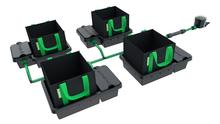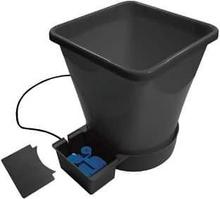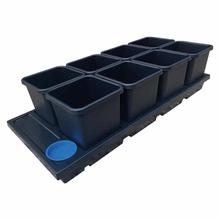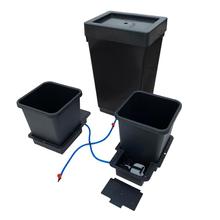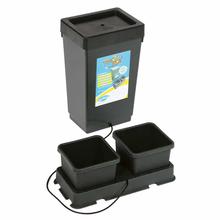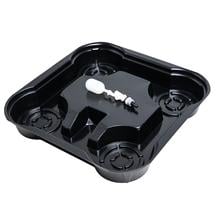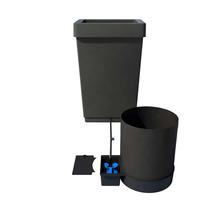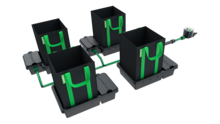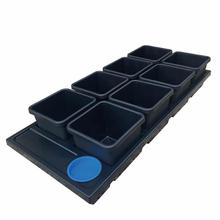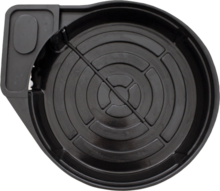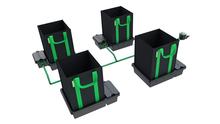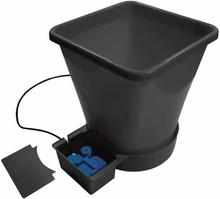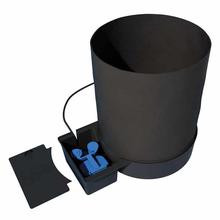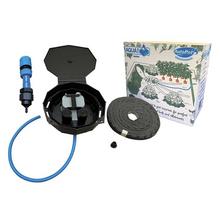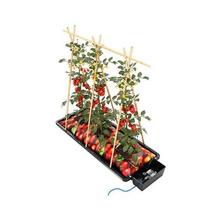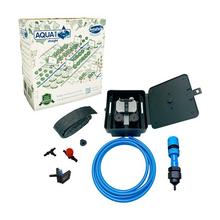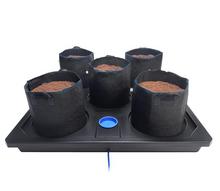


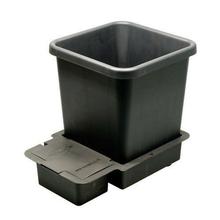
Autopot 1Pot-Module
£26.95
Quick Answer
Self-watering systems automatically supply plants with water or nutrient solution, helping maintain consistent moisture with less manual watering. Suitable for soil, coco coir and hydroponic growing, they reduce daily maintenance while supporting healthier roots and more reliable plant growth.
Self-watering systems make plant care easier by delivering water and nutrients automatically. Depending on the design, irrigation may be controlled by gravity, smart valves, capillary action or a central reservoir connected to multiple plant modules.
Maintaining a more stable moisture level helps reduce the stress caused by overwatering, underwatering and irregular feeding. These systems are suitable for home growers, busy gardeners and larger indoor gardens where watering every plant by hand can become time-consuming.
Our range includes AutoPot systems, Alien EasyFeed systems, MegaPot modules, AQUAbox watering systems and expandable automatic irrigation setups for different pot sizes and plant numbers.
New to hydroponics? Visit our Indoor Growing & Hydroponics Explained guides to compare the main growing systems and learn how automatic irrigation works.
Reduce daily hand-watering while maintaining more consistent moisture around the root zone.
Stable irrigation helps support healthy root development and steady plant growth.
Automatic watering reduces routine maintenance in small gardens and larger multi-pot setups.
Choose from single-pot modules or scalable systems capable of supplying many plants.
Self-watering systems automatically provide plants with water and, where required, nutrient solution. Instead of watering every pot manually, the grower fills a central reservoir or water supply and allows the system to irrigate each plant as needed.
Different systems use different delivery methods. Some rely on gravity and mechanical valves, while others use capillary action, wicks or pump-driven irrigation. The main purpose is the same: to provide a more reliable supply of moisture while reducing daily watering work.
Automatic plant watering can be used with soil, coco coir, perlite mixes and other suitable growing media. The correct system depends on the crop, pot size, number of plants and preferred nutrient programme.
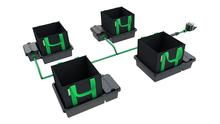
Gravity-fed systems use a raised reservoir connected to the plant trays by irrigation pipe. Water flows through the pipework without a pump, and a valve regulates when solution enters each tray.
Once the plants have used the available water, the valve opens and refills the tray. This demand-based irrigation allows the growing media to draw up moisture while avoiding constant saturation.
Other self-watering systems use capillary mats, AQUAbox products or pump-driven irrigation. These may be better suited to raised beds, larger containers or growing areas where individual pot trays are not practical.
| System type | How it works | Best suited to |
|---|---|---|
| Gravity-fed pot systems | A reservoir and mechanical valve supply water without electricity. | Indoor gardens, greenhouses and low-maintenance growing |
| Multi-pot watering systems | One central supply irrigates several plant modules. | Medium and large grow rooms |
| Capillary systems | Moisture moves from a water source into the growing media through wicking. | Seedlings, houseplants and smaller containers |
| Bed and planter irrigation | Water is distributed beneath or across larger growing areas. | Raised beds, planters and outdoor gardens |
| Pump-driven systems | A timer and pump deliver solution through irrigation lines. | Precision feeding and large plant numbers |
Start by considering the number of plants and their expected size at harvest. A single-pot module may be enough for one large plant, while expandable systems are more suitable for grow rooms containing several pots.
Pot volume is also important. Smaller pots make efficient use of space and are suitable for compact plants, while larger pots provide more growing media and root volume for bigger crops or longer vegetative periods.
Check that the reservoir capacity is suitable for the total number of plants. Larger gardens use more water, particularly during warm weather and late growth, so the reservoir must hold enough solution between inspections and refills.
| System range | Main advantage | Typical use |
|---|---|---|
| AutoPot 1Pot and XL | Simple modular gravity-fed watering | Individual plants and expandable gardens |
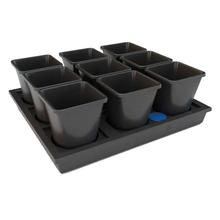
| Auto8 and Auto9 | Multiple plants supplied within one tray | Space-efficient multi-pot layouts |
| Alien EasyFeed | Expandable systems with multiple pot sizes | Small to large indoor gardens |
| MegaPot | Large plant modules and flexible configurations | Larger plants and modular cultivation |
| AQUAbox and Tray2Grow | Automatic irrigation for beds, trays and planters | Raised beds, grow bags and mixed planting areas |
Self-watering systems work well with soil and organic compost where the media is sufficiently free draining. Avoid compacting the substrate, as this can reduce root oxygen and slow the movement of water through the pot.
Coco coir is widely used in automatic watering systems because it combines reliable moisture retention with good drainage and aeration. Coco-based mixes should normally contain sufficient coarse material to maintain structure.
Adding perlite can improve drainage and airflow around the roots. These mixes are popular in gravity-fed systems because they help reduce the risk of the lower growing media remaining excessively wet.
Clay pebbles may be used alone in selected systems or added to improve drainage. The correct irrigation arrangement depends on the product and plant container.
Many self-watering systems can deliver mineral hydroponic nutrients from a central reservoir. Nutrients should remain fully soluble and suitable for the irrigation pipework, valves and fittings being used.
Thick organic feeds and products containing suspended solids may settle inside small pipes or valves. Always follow the system and nutrient manufacturer instructions before adding any product to the reservoir.
Keep the reservoir covered and mix the nutrient solution thoroughly. Regularly check pH and nutrient strength where applicable, especially when several plants share the same supply.
Before leaving plants unattended, operate the completed system for several days and check that each plant receives water correctly. The reservoir should contain enough solution for the expected period, with additional capacity for warm conditions and increased plant demand.
A self-watering system supplies plants from a reservoir or water source without requiring every pot to be watered manually. Water may be delivered through gravity, valves, capillary action or pump-driven irrigation.
Yes. Gravity-fed systems are particularly beginner-friendly because they operate without complicated pumps, timers or electrical controls.
Yes, provided the nutrients are suitable for the system. Fully soluble mineral feeds are commonly used, while thick organic products may block small pipework or valves.
Free-draining soil mixes, coco coir, coco-perlite blends and other well-aerated substrates are commonly used. The ideal media depends on the specific system and crop.
A correctly installed system with a suitably sized reservoir can continue watering plants while you are away. Test the system beforehand and account for expected plant water use.
Not always. Gravity-fed systems such as AutoPot-style setups can operate without electricity, while drip and recirculating systems usually require a pump.
Correctly configured demand-based systems are designed to maintain stable moisture. Problems can still occur if unsuitable growing media, incorrect potting methods or damaged valves restrict drainage.
Many self-watering systems are modular and can be expanded by adding pots, trays, pipework and a larger reservoir where required.
Doctor Blooms can help you compare AutoPot, EasyFeed, MegaPot and other automatic irrigation systems for your pot size, plant numbers and growing media.
Call 01279 501857 or visit our Bishop's Stortford showroom for expert advice.