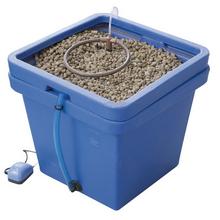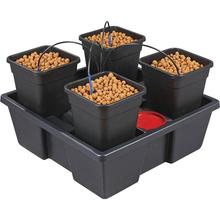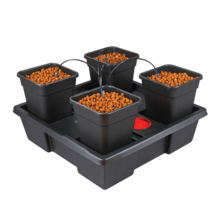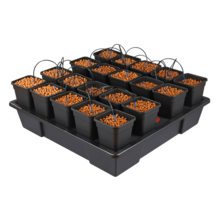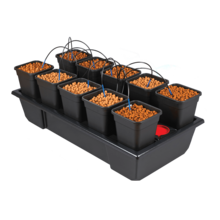


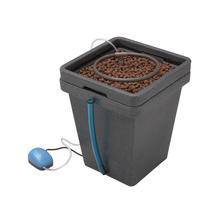
GHE WaterFarm Grow System
£54.98
Quick Answer
Automated drip systems deliver water or nutrient solution directly to each plant through controlled drip emitters. Timed irrigation provides consistent root-zone moisture, reduces water waste and removes much of the daily work involved with hand-watering.
Automated drip systems provide controlled irrigation directly to the root zone of each plant. Water or nutrient solution travels from a reservoir through irrigation pipe and individual drip lines before being released through emitters positioned around the growing media.
Systems may be gravity-fed, pump-driven, recirculating or controlled by an irrigation timer. This makes drip irrigation suitable for soil, coco coir, clay pebbles and many other hydroponic growing media.
Our range includes compact single-plant grow systems, expandable multi-pot systems and automatic watering equipment for indoor gardens, greenhouses and outdoor growing spaces.
New to hydroponics? Visit our Indoor Growing & Hydroponics Explained guides to learn about the main hydroponic system types and how indoor growing setups work.
Timers and regulated emitters allow water and nutrients to be delivered at controlled intervals.
Solution is applied directly to the growing media instead of being poured across the entire growing area.
Once correctly configured, automated systems can irrigate plants without frequent manual input.
Suitable for individual plants, small home gardens and larger multi-pot hydroponic installations.
Automated drip systems are irrigation setups that supply measured amounts of water or nutrient solution directly to individual plants. A network of main irrigation pipe, smaller drip lines and emitters distributes the solution across the growing area.
The system may use a water pump to move solution from a reservoir or rely on gravity where the supply tank is positioned above the plants. An irrigation timer or controller determines when the system operates and how long each watering event lasts.
This controlled approach can maintain consistent moisture levels while reducing the time and labour required for hand-watering.
A typical automated drip system consists of a reservoir, water pump, irrigation timer, delivery pipe, drip lines and emitters. The pump moves water or nutrient solution through the pipework whenever the timer activates an irrigation cycle.
Each emitter releases solution close to the base of the plant. Depending on the system, excess runoff may drain away to waste or return to the reservoir for recirculation.
The correct irrigation frequency depends on the plant size, growing medium, pot volume, temperature and stage of growth. Coco coir and clay pebbles often require more frequent irrigation than moisture-retentive soil mixes.
| System type | How it works | Best suited to |
|---|---|---|
| Single-pot drip systems | A compact reservoir supplies one plant or growing module. | Beginners and small indoor gardens |
| Multi-pot systems | A central reservoir supplies several pots through individual drip lines. | Medium and large grow rooms |
| Recirculating drip systems | Runoff drains back into the reservoir for reuse. | Efficient hydroponic production |
| Run-to-waste systems | Fresh solution is delivered to plants and excess runoff is collected separately. | Coco coir and precision crop management |
| Solar watering systems | Solar-powered equipment automatically waters plants without mains electricity. | Greenhouses, gardens and remote growing areas |
Begin by deciding how many plants need to be irrigated and whether you want a complete grow system or only the irrigation equipment. Complete systems normally include plant pots, a reservoir, pipework and the main fittings required for operation.
Check the pot capacity and overall footprint to make sure the system fits comfortably inside the available growing area. Larger plants generally require larger containers, greater reservoir capacity and higher irrigation flow rates.
You should also decide whether the nutrient solution will be recirculated or allowed to drain away. Recirculating systems can reduce waste, while run-to-waste irrigation gives the grower greater control over the fresh solution supplied during each watering event.
Coco is commonly used with automated drip irrigation because it provides a useful balance of water retention, drainage and root-zone aeration. Plants can be watered several times per day once they are established.
Clay pebbles hold relatively little water and are often irrigated frequently. They are widely used in recirculating drip systems such as WaterFarm and AquaFarm-style grow modules.
Drip irrigation can also be used with soil and organic growing media. Watering events are normally less frequent because these substrates retain moisture for longer.
Inspect drip emitters regularly to confirm that each plant receives an even flow. Mineral deposits, organic nutrients and small particles can gradually restrict irrigation lines or block emitters.
Use suitable filters where required and flush the pipework between crops. Pumps, reservoirs and irrigation lines should be cleaned regularly to prevent residue from building up.
Reservoir pH, nutrient strength and water temperature should also be monitored when hydroponic nutrients are being used.
An automated drip system uses pipework and emitters to deliver measured amounts of water or nutrient solution directly to plants according to a timer or irrigation controller.
Yes. Coco coir is one of the most popular growing media for automated drip irrigation because it combines moisture retention with good drainage and aeration.
Most indoor hydroponic drip systems use a pump, although some watering systems are gravity-fed or powered by solar energy.
Irrigation frequency depends on the crop, plant size, pot volume, growing medium and environmental conditions. The schedule should be adjusted as plant water demand increases.
Yes. Multi-pot drip systems use a central reservoir and individual delivery lines to irrigate several plants from the same water or nutrient supply.
A recirculating system returns excess nutrient solution to the reservoir. A run-to-waste system collects or disposes of runoff separately instead of reusing it.
Call Doctor Blooms on 01279 501857 or visit our Bishop's Stortford showroom for help choosing an automated irrigation system for your plants, growing media and available space.