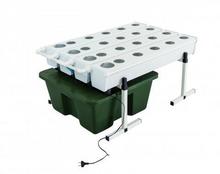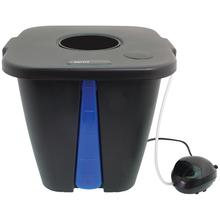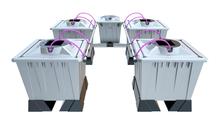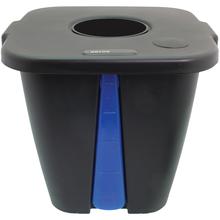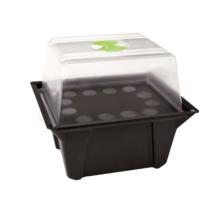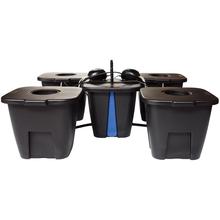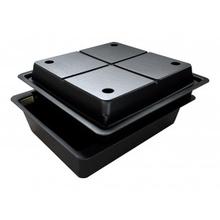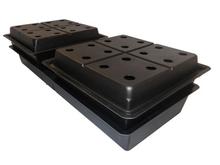


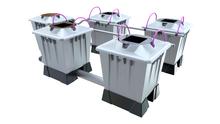
Alien Aero (4 TO 48 Pot) 15L Pro Silver Series
From
£845.00
Quick Answer
Aeroponic systems suspend plant roots in air and deliver water and nutrients directly to the root zone as a fine spray or mist. This highly oxygenated growing method can support rapid root development, efficient nutrient uptake and vigorous plant growth when irrigation and environmental conditions are managed correctly.
Aeroponics is an advanced hydroponic growing method designed to maximise the amount of oxygen available around plant roots. Instead of growing continuously in soil or nutrient solution, the roots remain suspended inside an enclosed chamber and are irrigated at regular intervals.
This direct delivery of water, nutrients and oxygen can produce fast, healthy growth while using relatively little growing media. Aeroponic systems are used for propagation, herbs, leafy crops, vegetables and larger fruiting plants.
The range includes compact single-pot systems, multi-pot recirculating systems, aeroponic propagators and expandable professional setups. Choosing the right design depends on the crop, available space, plant count and level of environmental control.
New to hydroponics? Visit our Hydroponics Explained buying guides for help understanding hydroponic systems, irrigation, lighting and grow-room setup.
High oxygen availability around the roots can support vigorous plant development and efficient nutrient uptake.
Recirculating systems reuse nutrient solution and deliver water directly to the root zone with minimal waste.
Exposed roots receive excellent access to oxygen while regular irrigation supplies moisture and nutrients.
Choose from single-pot systems, compact propagators and expandable multi-pot professional systems.
Aeroponics is a soil-free growing method in which plant roots are suspended inside an enclosed chamber. Water and nutrients are applied directly to the exposed roots through spray jets, misters or irrigation manifolds.
Between irrigation cycles, the roots remain surrounded by air rather than becoming continuously submerged. This allows them to receive high levels of oxygen while still obtaining the moisture and mineral nutrients required for growth.
Aeroponics is part of the wider hydroponics family, but it differs from Deep Water Culture because the roots do not remain permanently suspended in a reservoir. It also differs from NFT because the roots are sprayed rather than sitting within a continuously flowing film of nutrient solution.
Most aeroponic systems use a nutrient reservoir, water pump, pipework and spray manifold. The pump moves nutrient solution from the reservoir to spray jets positioned inside each root chamber.
The nutrient solution coats the roots before draining back into the reservoir for reuse. A timer or system controller activates the pump at regular intervals to prevent the roots from drying out.
Reliable irrigation is particularly important with aeroponics because exposed roots can lose moisture quickly if the pump, timer or spray jets stop working. Pumps, filters and nozzles should therefore be checked and cleaned regularly.
Lettuce, spinach and other leafy crops can perform well because they respond quickly to consistent irrigation and high root-zone oxygen levels.
Basil, parsley, coriander and similar culinary herbs are well suited to controlled aeroponic environments.
Tomatoes, peppers and cucumbers can be grown in larger aeroponic systems when plants are properly supported and the reservoir is sized for their water demand.
Aeroponic propagators are widely used for rooting cuttings because the stems receive moisture and oxygen without becoming waterlogged.
| System type | Best suited to | Main consideration |
|---|---|---|
| Single-pot systems | Small gardens and individual plants | Simple footprint and low plant count |
| Multi-pot systems | Larger plants and indoor grow rooms | Pump capacity and even irrigation |
| Aeroponic propagators | Rooting cuttings | Water temperature and hygiene |
| Expandable systems | Growing operations that may increase in size | Reservoir and pump sizing |
Aeroponic systems should be inspected regularly to ensure every root chamber receives an even spray. Blocked jets can create dry areas and quickly affect plant health.
Use clean water, suitable filtration and fully soluble hydroponic nutrients. The reservoir should be monitored for pH, electrical conductivity and water temperature, while pipework and root chambers should be cleaned between crops.
It is also sensible to consider pump reliability and backup planning, particularly with larger systems. Because the roots are exposed, prolonged irrigation failure can cause problems faster than in systems containing a moisture-retentive substrate.
An aeroponic system supports plants above an enclosed root chamber and sprays the exposed roots with water and hydroponic nutrients at controlled intervals.
Aeroponics is a form of hydroponics. It can provide exceptional root-zone oxygen and fast growth, but it generally requires more careful irrigation management than simpler systems such as Deep Water Culture or drip irrigation.
A recirculating aeroponic system can use water efficiently because the nutrient solution is applied directly to the roots and unused solution returns to the reservoir.
Yes, although beginners should be prepared to monitor pumps, timers, spray jets, pH and nutrient strength. A smaller complete system can be easier to learn with than a large expandable installation.
Leafy greens, herbs, cuttings, vegetables and fruiting plants can all be grown aeroponically when the system is correctly sized and managed.
Call Doctor Blooms on 01279 501857 or visit our Bishop's Stortford showroom for help choosing an aeroponic system for your space, crop and plant count.